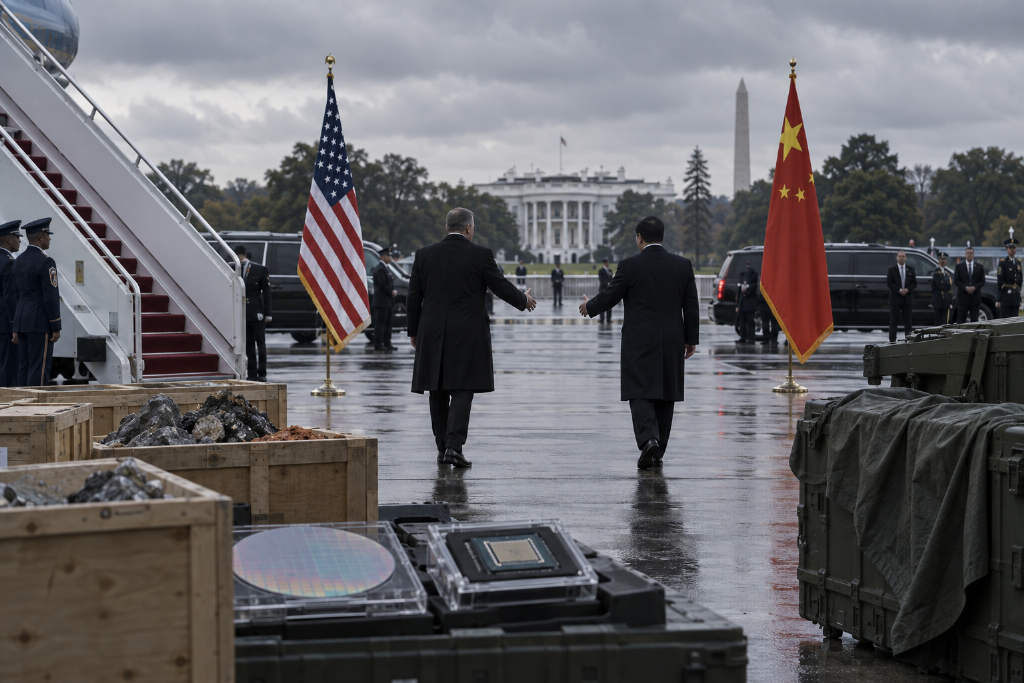
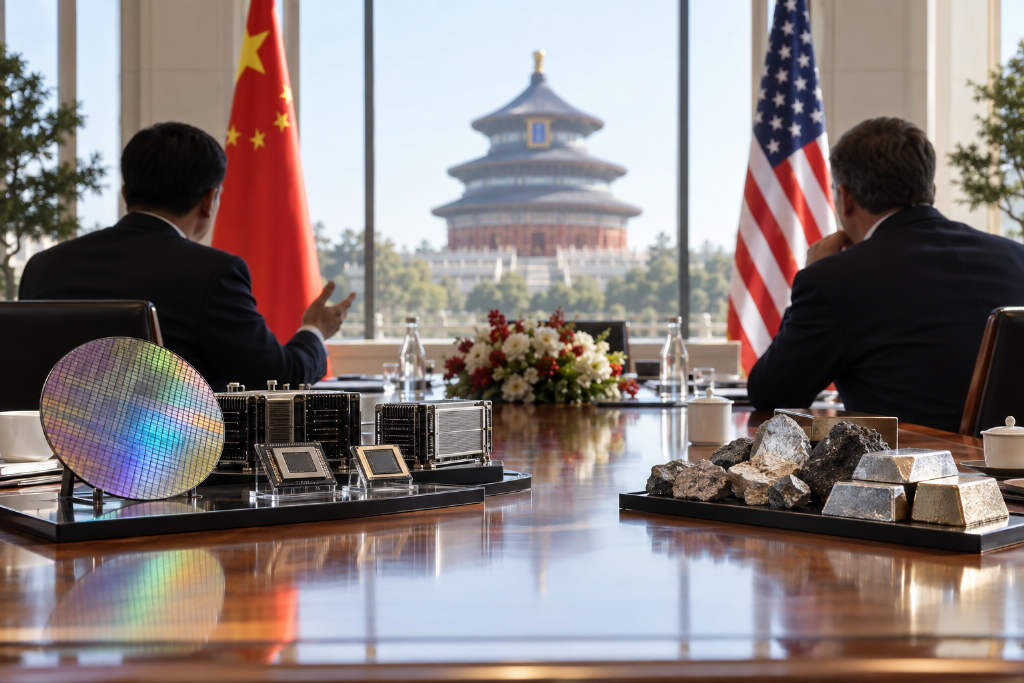
Donald Trump2026-09-22 03:12:57Trump to greet Xi at airport ahead of White House summit focused on rare earths, AI chip controls and Taiwan arms salesU.S. President Donald Trump is set to personally greet Chinese President Xi Jinping at Joint Base Andrews on Sept. 23, an unusual move that has drawn extra attention to the upcoming White House summit. The meeting comes with the clock ticking on a trade truce the two sides reached in Busan last year, which is due to expire on Nov. 10 unless both governments agree to extend it. Ahead of the formal talks, Treasury Secretary Scott Bessent and U.S. Trade Representative Jamieson Greer are expected to meet Chinese Vice Premier He Lifeng to shape the agenda. Several difficult issues are on the table at once. They include China’s rare earth and critical minerals supply, U.S. export restrictions tied to AI chips and materials, and the risk that Taiwan arms sales could disrupt the summit itself. The report also says the two sides are expected to discuss China-Iran economic ties and detained foreign nationals. According to CNBC, Ashton Intelligence founder Anna Ashton said some deliverables may emerge because of the leader-level summit, but she does not see the two countries as being close to a breakthrough. Her base case is that both sides will settle for preserving the status quo.380
US-China trad2026-09-21 17:12:41US-China trade talks open in New York, putting AI infrastructure and biotech names in focusA new round of high-level US-China trade talks has started in New York, with markets closely watching both the negotiations and an expected leaders’ meeting later this month. China’s Ministry of Commerce said Vice Premier He Lifeng is visiting the United States from Sept. 19 to 23, and the first session took place on the morning of Sept. 20 local time at JPMorgan’s headquarters in New York. The US side was led by Treasury Secretary Bessent, with Trade Representative Greer also taking part. The agenda is broader than in earlier rounds, covering artificial intelligence, AI safety, technology export controls, tariff extensions, rare earths and critical mineral supply chains, and procurement lists. Two issues stand out for markets: whether the tariff truce due to expire on Nov. 10 will be extended, and whether both sides can reach a more stable and predictable arrangement on export controls tied to rare earths and critical minerals. After China’s commerce ministry released the visit schedule on Sept. 17, Chinese ADRs and the offshore yuan both strengthened. The Nasdaq Golden Dragon China Index rose 0.76% while major US indexes were mixed. Alibaba, Bilibili and PDD moved higher, with gains concentrated in AI and IDC-related names such as GDS and VNET. Separately, Reuters reported on Sept. 18 that the US Treasury is drafting new rules on investment in China’s pharmaceutical sector that would still allow most license-in drug deals, with restrictions focused on pathogens or biotechnology that could be weaponized.490
United States2026-09-20 08:04:11U.S. Treasury Secretary Bessent to discuss AI and rare earth issues with China todayTechub News reported that U.S. Treasury Secretary Bessent is set to hold talks with the Chinese side today on issues related to artificial intelligence and rare earths. The discussion is expected to cover AI development, supply chain security, and cooperation on critical minerals. The report framed these topics as core concerns spanning bilateral trade, technology, and economic relations. The cited source for the update was @Kalshi. No additional details on the format of the talks or the participants on the Chinese side were provided in the brief.300
US stocks2026-09-09 08:32:57CoreWeave jumps 11.72% as AI compute names diverge, while AVAV heads into a key post-merger earnings testU.S. stocks closed lower on Sept. 8, but AI compute leasing names broke from the broader tape. CoreWeave rose 11.72% to $99.83 even though Palantir’s partnership announcement centered on rival Nebius, which gained 7.73%. The move stood out because the signal was read as demand for the broader rental-compute trade rather than a company-specific order, while chip suppliers Micron and Nvidia both finished in the red. The report also shifts to AeroVironment, which is scheduled to release earnings after 20:00 UTC, with a call at 20:30. According to the source article, this is the first quarter in which AVAV faces a like-for-like year-over-year comparison after its May 2025 BlueHalo acquisition was fully annualized. That matters because the company’s previous triple-digit growth rates, including 133% in fiscal 2026 fourth quarter revenue, were lifted by consolidation base effects, while fiscal 2027 guidance points to roughly 10% growth on a fully comparable basis. The article further examines how the AI compute chain split between rental-capacity providers and chip sellers, and why rare-earth mining is less constrained than refining and magnet production in the U.S. supply chain discussion.1200
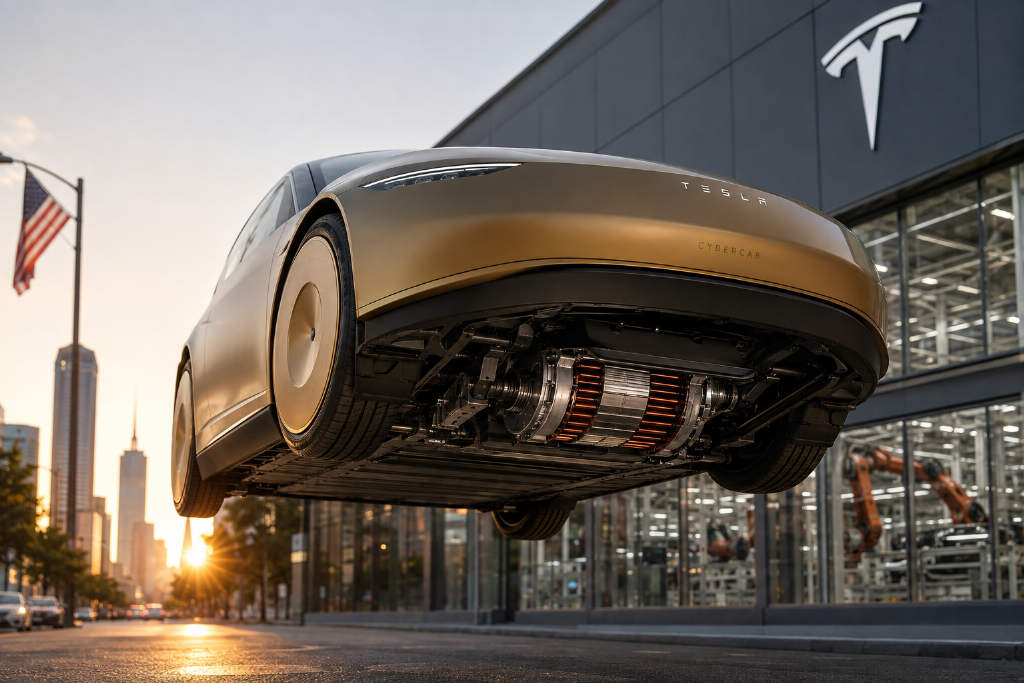
Tesla2026-09-07 05:24:11Tesla Says Cybercab Motor Uses No Rare Earths, Raising Questions for China’s Supply-Chain EdgeTesla has said the drive motor used in Cybercab contains no rare earth materials while maintaining driving range, a claim Elon Musk amplified on X and described as "very difficult" to achieve. The report argues that the technical challenge comes from replacing neodymium-iron-boron permanent magnets with weaker non-rare-earth materials without sacrificing efficiency, weight, or range. The piece also traces Tesla’s motor strategy over time. Early Model S and Model X vehicles relied on AC induction motors that did not require rare earths. Later, Model 3 and Model Y shifted to permanent magnet synchronous motors for better efficiency and packaging, though that increased reliance on neodymium, dysprosium, and terbium. Tesla then announced a zero-rare-earth target for its next-generation drive unit in 2023, and the article says Cybercab is now the first real vehicle to carry that approach. According to the source article, the significance goes beyond materials. Tesla’s next-generation drive unit is said to run on an automated production cadence of under 10 seconds, use 50% less production-line floor space, lower silicon carbide chip demand in the inverter, and cut unit cost by about $1,000. The article frames that as a manufacturing and supply-chain move as much as an engineering one, especially as Tesla prepares for growing motor demand from robotaxi and humanoid robot programs.1000
China2026-08-05 17:13:32China to enforce new exit-entry rules that may bar travel for people tied to controlled technologiesChina has released a new regulation on exit and entry administration that will take effect on Sept. 15, 2026, adding fresh attention to export controls and the movement of technical talent. Signed by Premier Li Qiang and issued as a State Council order, the 19-article regulation is described in the source report as the most important administrative rule in this area since the 2013 Exit and Entry Administration Law came into force. The provision drawing the most scrutiny allows relevant authorities, including commerce officials under the State Council, to stop Chinese citizens from leaving the country if they violate export control or technology import-export management rules and are deemed likely to endanger national industrial or technological security. The report says Chinese experts see the measure as aimed at sectors already under export control, including rare earth separation technology, electrolyte formulas for electric-vehicle batteries, and N-type solar cell technology. The timing also comes as the United States, Japan, and the European Union work to build alternative rare earth and battery supply chains in Australia, Brazil, and Africa.1790